Discovering the Mahabodhi Temple: A Spiritual Journey to the Heart of Buddhism
Nestled in the serene town of Bodh Gaya in Bihar, India, the Mahabodhi Temple stands as a beacon of spiritual enlightenment and historical significance. Recognized as a UNESCO World Heritage Site, this ancient temple is not only a pilgrimage destination for millions of Buddhists worldwide but also a testament to India's rich cultural and architectural heritage.
The Historical Significance of Mahabodhi Temple
The Mahabodhi Temple, meaning "Great Awakening Temple," marks the exact location where Siddhartha Gautama, the Buddha, attained enlightenment around 500 BCE. The site is revered as one of the four most important pilgrimage sites for Buddhists, alongside Lumbini (the birthplace of Buddha), Sarnath (where he delivered his first sermon), and Kushinagar (where he attained parinirvana).
The temple complex was initially constructed by Emperor Ashoka in the 3rd century BCE, who played a pivotal role in spreading Buddhism across Asia. The central structure, as it stands today, was developed between the 5th and 6th centuries CE and underwent several restorations over the centuries. Despite numerous invasions and natural calamities, the temple has retained its architectural grandeur and spiritual ambiance.
Architectural Marvel
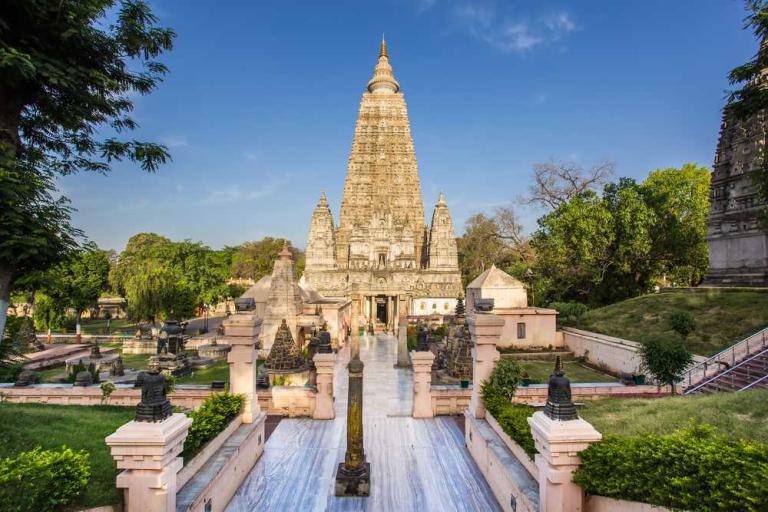
The Mahabodhi Temple is a remarkable example of ancient Indian architecture, combining elements of Dravidian and Gupta styles. The main temple tower, standing at approximately 55 meters (180 feet), is adorned with intricate carvings and motifs that depict various events from Buddha’s life. The temple complex includes several smaller stupas and shrines, each telling a unique story of devotion and reverence.
The temple is constructed primarily from brick, a testament to the advanced engineering skills of ancient Indian craftsmen. The towering spire is crowned with a chatra (umbrella) symbolizing the sovereignty of Dharma. The interior houses a large gilded statue of Buddha in the earth-touching posture (bhumisparsha mudra), symbolizing the moment of his enlightenment.
The Sacred Bodhi Tree
Adjacent to the Mahabodhi Temple is the sacred Bodhi Tree (Ficus religiosa), under which Buddha is said to have meditated and achieved enlightenment. The present tree is a direct descendant of the original Bodhi Tree, making it a living relic of immense spiritual significance. Pilgrims from around the globe come to meditate under its leafy canopy, seeking peace and enlightenment.
The Bodhi Tree is surrounded by a stone railing adorned with carvings depicting scenes from Buddha’s life. The Vajrasana or Diamond Throne, located near the tree, marks the exact spot where Buddha sat in meditation. This revered site is a focal point for prayers and offerings by devotees.
Pilgrimage and Spiritual Practices
The Mahabodhi Temple is a hub of spiritual activity and pilgrimage, attracting visitors from various cultural and religious backgrounds. Daily rituals, chanting of Buddhist scriptures, and meditation sessions create an atmosphere of profound tranquility and reverence. During the annual Buddha Purnima festival, commemorating Buddha’s birth, enlightenment, and death, the temple complex comes alive with vibrant celebrations and ceremonies.
Visitors can participate in guided meditation sessions, listen to teachings from learned monks, and engage in community services. The temple also offers facilities for Vipassana and other forms of Buddhist meditation, providing a serene environment for spiritual growth and introspection.
Preservation and Conservation
Preserving the Mahabodhi Temple is a priority for both the Indian government and international organizations. Efforts are continuously made to maintain its structural integrity and protect it from environmental damage. The temple's inclusion in the UNESCO World Heritage list underscores its global importance and ensures that it receives the attention and care necessary for its preservation.
Conclusion
The Mahabodhi Temple is not just a monument; it is a living embodiment of the Buddhist path to enlightenment. Its serene ambiance, coupled with its historical and spiritual significance, makes it a must-visit destination for anyone seeking a deeper understanding of Buddhism and its teachings. As you walk through the temple complex, under the shade of the ancient Bodhi Tree, you are transported to a realm of peace and spiritual awakening, retracing the steps of the Buddha himself.
Visiting the Mahabodhi Temple is more than a journey to a historical site; it is a pilgrimage to the heart of Buddhist philosophy and an opportunity to experience the timeless quest for enlightenment.
Leave a Replay
Your email adress will not be published ,Requied fileds are marked*.